Toyota Starlet Safety Rating Jumps From Zero to Four Stars
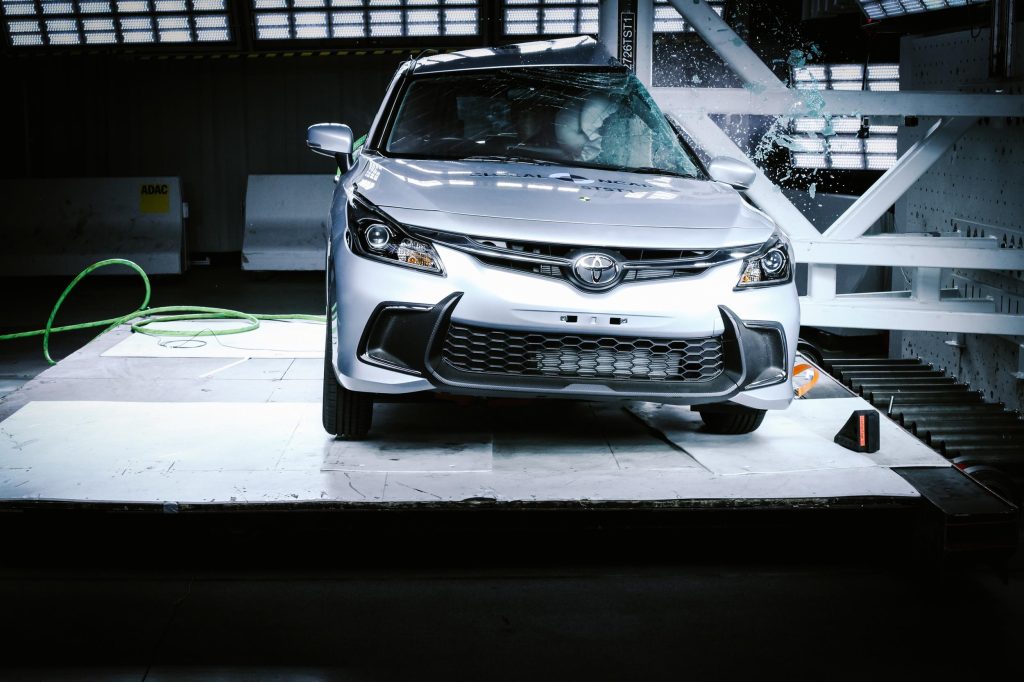
The Toyota Starlet has gone from a concerning zero-star safety rating to four stars for adult occupant protection in the latest Global NCAP #SaferCarsForAfrica crash tests, following a significant safety upgrade that makes six airbags standard.
The result is a major turnaround for one of South Africa’s most popular entry-level cars.
When Global NCAP tested the two-airbag version of the Starlet in May, it awarded the hatchback zero stars for adult occupant protection and three stars for child occupant protection. At the time, the Starlet was fitted with driver and passenger airbags and Electronic Stability Control as standard, but did not have side head-protection airbags.
That changed following a production update at Toyota’s manufacturing plant in India, where the Starlet gained six airbags as standard equipment, including side curtain airbags.
Global NCAP subsequently tested the updated model using its own funding after Toyota declined an offer to voluntarily submit the six-airbag version for testing.
The upgraded Starlet achieved four stars for adult occupant protection, while retaining its three-star rating for child occupant protection.
What changed on the Toyota Starlet?
The latest result highlights just how much difference additional safety equipment can make, particularly on an entry-level vehicle.
In the frontal crash test, Global NCAP found the Starlet’s footwell area to be stable, although the bodyshell was rated as unstable and considered unable to withstand further loadings.
The six-airbag model performed better in the side-impact assessments, with good head, abdomen and pelvis protection and adequate chest protection. In the side-pole test, head protection was again rated as good, although chest protection was marginal.
There were still areas of concern for child occupants. In the frontal impact, the head of the three-year-old dummy made contact with the vehicle interior and chest protection was rated as low. In the side-impact test, the head of the three-year-old dummy was also exposed to impact.
Despite these shortcomings, the move from zero to four stars for adult occupant protection represents a substantial improvement.
Richard Woods, CEO of Global NCAP, welcomed the change, saying the result shows what can be achieved when manufacturers make safety a priority.
“Safety should never be reduced to an optional extra.”
AA welcomes Toyota Starlet safety improvement
The Automobile Association of South Africa also welcomed the new result.
AA CEO Bobby Ramagwede said the jump from zero to four stars demonstrates that improving the safety specification of affordable vehicles does not necessarily require major changes to entry-level vehicle ranges.
He also called on other manufacturers whose vehicles have performed poorly in recent #SaferCarsForAfrica testing to improve their safety specifications.
The issue is particularly relevant in South Africa, where affordable vehicles make up a significant part of the new-car market.
The Starlet has sold more than 20,000 units locally, making it an important model for Toyota and a significant presence on South African roads.
Why the Starlet’s safety rating matters
The Starlet testing forms part of Global NCAP’s #SaferCarsForAfrica campaign, which aims to highlight differences in vehicle safety between markets and push manufacturers towards offering safer vehicles as standard.
The concern is that vehicles sold in markets without mandatory independent crash-testing requirements can sometimes be offered with fewer safety features or lower levels of structural protection than comparable models sold in markets with stricter safety regulations.
In the Starlet’s case, the latest test provides a clear example of how adding safety equipment can materially change a vehicle’s crash-test performance.
For buyers, however, the result also serves as a reminder to check which specification of a vehicle is actually being sold locally. A safety rating applies to the vehicle configuration that was tested, meaning equipment changes can make a significant difference.
For the Toyota Starlet, the latest result is a substantial step in the right direction — taking the model from one of the poorest possible adult occupant protection scores to a much more respectable four-star rating.
And, perhaps most importantly, it demonstrates that safety equipment such as additional airbags can no longer be treated as something reserved for more expensive vehicles.